Showing posts with label UNICEF. Show all posts

Tuesday, 24 January 2017

Designing Solutions for Indonesia’s Children in the Age of Haze

By Cory Rogers, Communication Officer

©Center for International Forestry Research/2014
 
Jakarta: When Indonesia’s yearly agricultural fires start up each fall, belching acrid haze through Borneo, Sumatra and over borders, the air one breathes becomes a health hazard unto itself: Schools shut down, thousands fall ill, and some will die from respiratory ailments.

Few dispute that haze is deadly, but solutions have been slow in coming, leaving millions of (mostly) rural Indonesians exposed to harm. Indeed, despite land and forest burning laws passed following the 2015 El Niño-powered haze (an event that one study says may have caused 100,000 premature deaths), haze returned in 2016. There is a clear need for new ideas.

Monday, 18 May 2015

UNICEF’s psychosocial counselling on air is already making an impact

By Naresh Newar

On 7 May, Chiranjibi Adhikari, sitting with his injured 6-year-old son, Kritagya, in one of two UNICEF-provided tents set up on the grounds at Dhading District Hospital in the town of Dhading Besi, headquarters of Dhading District, speaks with a psychosocial counsellor live via his mobile telephone, during a segment of the UNICEF-supported Bhandai Sundai (Saying Listening) radio programme. ©UNICEF/2015/Panday.

Dhadingbesi, Nepal – Chiranjibi Adhikari had never seen his 6-year-old son Kritagya so restless.

“He is always looking for attention,” the 45-year-old said, “He wasn’t like this before."

Kritagya, he said, has been traumatised ever since the 7.8 Richter scale earthquake struck Nepal on 25 April 2015.

“I don’t know how to control this boy,” said Chiranjibi. “He is extremely panicky and nothing I do seems to calm him.”

Wednesday, 24 December 2014

How the chaos post-tsunami helped Aceh become a child protection pioneer

When a child is accused of a crime, the police tries to use mediation to resolve the situation and in more than half of the case, it works. © UNICEF Indonesia/2014/Achmadi

BANDA ACEH, Indonesia, October 2014 – About a year ago, three teenage boys were arrested by police at a sports stadium in Banda Aceh for beating up a 21-year-old man. Two of the boys were 17 and the third had just turned 18. In the past, they would have ended up in jail. But thanks to some far-reaching legal reforms, initiated after the Indian Ocean tsunami, things developed in a different direction.

They were held for 24 hours at the children’s unit at the police station while their families as well as the heads of the villages where they lived were contacted. The victim’s family and village head were also asked to attend the police station where all the parties sat down to talk.

This is a process known as mediation. Police records don’t show how long it took in this instance, but officers say on average its takes three mediation sessions to resolve a case.

The families talked about the situation and tried to come to an agreement about how the perpetrators should be punished. In the end, the families of the three boys agreed to pay the medical expenses of the victim within ten days, or face a court case. The three were then released.

Ten years ago, the police had no mandate to facilitate a mediation like this. The boys would have been facing a trial and a maximum jail sentence of five years. Children used to be treated much like adults when they were accused of committing an offense or a crime. But since the tsunami struck the area on the 26th of December 2004, Indonesia’s Aceh province has made huge strides in how it deals with children who come into contact with the law.


++++

Monday, 1 September 2014

UNICEF Indonesia welcomes new Representative Gunilla Olsson


Gunilla Olsson, UNICEF Indonesia Representative
©UNICEF/2012
JAKARTA, 1st September 2014 – UNICEF Indonesia’s new Representative Gunilla Olsson has taken up her post in Jakarta today.

She has moved to the country from New York where she was UNICEF’s Director of Governance, UN and Multilateral Affairs for two years.

“It’s an exciting time to be taking on this role in Indonesia as the country welcomes a new government,” she said. “I’m looking forward to working with them on the next five-year plan for UNICEF’s involvement in Indonesia.”


Gunilla Olsson with staff at the UNICEF office in Jakarta
©UNICEF Inodnesia/2014/Razak

Ms. Olsson has a degree in Social Anthropology from the University of Stockholm and has worked with numerous international organisations in the past, including IFAD, ILO, FAO, GTZ, Sida and the Swedish Ministry of Foreign Affairs.

She is a national of Sweden and is married with two daughters.

Ms. Olsson replaces former Country Office Representative Angela Kearney who will become UNICEF’s Representative in Pakistan.

Friday, 29 August 2014

Working together to save mothers and babies in Sulawesi


Ratna with her son Ralvin at the local health centre in Galesong
©UNICEF Indonesia/2014/Ramadana
GALESONG, South Sulawesi, August 2014 - It was ten o’clock at night when Ratna Adam started to feel labour pains. She was at home in the seaside village of Galesong, Takalar District in South Sulawesi. Her fisherman husband was away working in Kalimantan, so the first person she called was Basse Cama, a Traditional Birth Attendant (TBA).

Ibu Basse has been helping women in Galesong give birth for 33 years and is a respected member of the community. She lives about a five minute walk from Ratna, so she hurried over to help the expectant mother.

Friday, 1 August 2014

Engaging global partners to innovate for Indonesian children

by Jeff K Hall, UNICEF Indonesia Innovation Lab Lead
 
Quick question: What do you get when you mix Schneider Electric Country Presidents with UNICEF innovators?

Here’s our answer: Creative arts, storyboards, and video skits!

In a recent workshop run by UNICEF Indonesia with WDHB (Worldwide Experiential Learning for Executives) and KIBAR (an Innovation group from Jakarta), UNICEF presented Schneider’s Country Presidents with a development challenge – the problem of natural disasters in Indonesia, a major issue in this country – and asked the team to come up with innovative solutions for young people.

Thursday, 31 July 2014

Check list for a healthy life

By Nova Fransisca Silitonga, Corporate Partnership Officer, UNICEF Indonesia

Have you washed your hands with soap? Had breakfast? Brushed your teeth? Pooed in the loo? Cleaned your ears?

These are some of the questions pupils at Elementary School SDN 69 in Galesong village, Takalar District, South Sulawesi have to answer every morning.

Their teachers ask them to fill in a wall chart to show which activities they’ve completed, and which they haven’t. The exercise is designed to encourage pupils to be honest while also teaching them how to have a healthy lifestyle.

Monday, 7 July 2014

Muslim leaders at forefront of social change to reduce stunting

 by Iwan Hasan


Kyai Subhan at the pesantren in Brebes, Central Java
© UNICEF Indonesia/2014/Iwan

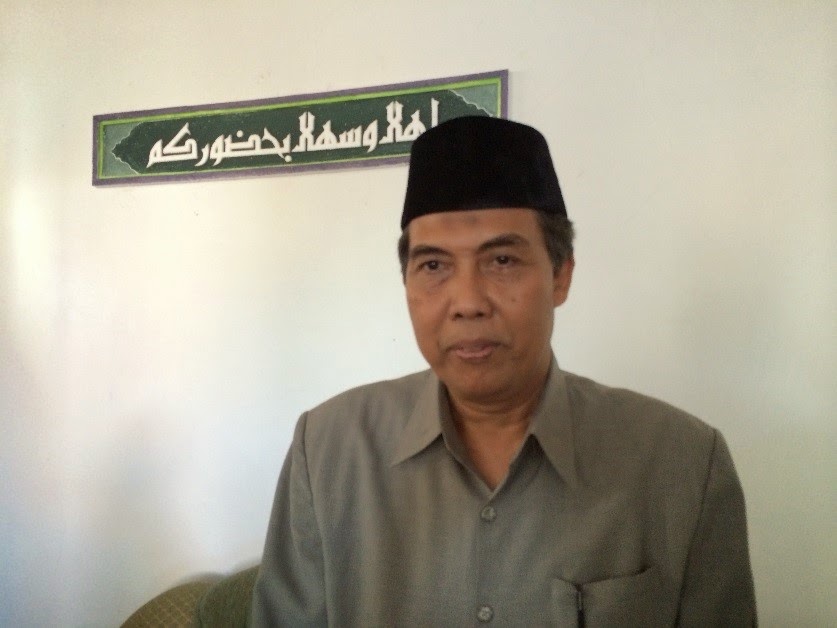
BREBES, Indonesia, April 2014 - Subhan Makmun, known as Kyai Subhan, looks like a typical traditional Islamic scholar or ulama. He lives among thousands of his students in an Islamic boarding school in Brebes, Central Java. He wears a traditional sarong and a black Malay cap.  

But looks can be deceiving. Subhan’s view on Islamic Syariah is very progressive. “Islam is not narrow but broad,” he says.

Kyai Subhan is one of the most revered ulamas in Central Java thanks to his vast knowledge of Islamic jurisprudence. But classical Islamic books are not the only books he reads. He says he’s read “Facts for Life”, a book on child care published by UNICEF in association with several other UN agencies.

Friday, 20 June 2014

Children in Makassar speak out on violence

by Lauren Rumble, Chief, Child Protection, UNICEF Indonesia

Michelin is 17 years old and is the President of the Child Forum in Makassar. I met her in May this year on my first visit to Makassar, along with other leaders of the Forum, and I asked them about their opinions on violence against children in the city.

She believes that violence against children, especially child trafficking and sexual violence against children living and working on the streets are major concerns for Makassar’s children.

“Not enough is being done about these issues,” she says.

Monday, 16 June 2014

Ferry Salim celebrates 10 years with UNICEF

by Sarah Grainger

Ferry Salim on a trip to Aceh with UNICEF in 2012. 
© UNICEF Indonesia/2012

JAKARTA, Indonesia, June 2014 - Actor, model and entrepreneur Ferry Salim is celebrating 10 years as UNICEF Indonesia’s National Ambassador.

It was June 2004, when UNICEF approached him and asked him if he would be prepared to work as an advocate for children’s rights.

A father of three children, he readily agreed.

Just six months later, the Indian Ocean tsunami struck northern Sumatra as well as Thailand, Sri Lanka, India and many other countries, leaving 230,000 people dead.

Wednesday, 11 June 2014

Sports for Development

Millions of eyes will be on Brazil this week when the international footballing elite meet for the World Cup finals. Football is hugely popular in many countries and there’s no doubt that sport is a unifying force. But not every child has access to physical education, games and sports. In Indonesia, traditionally most schools do not consider physical education a priority. Children with special needs are often unable to take part in the sports on offer. And many teachers think cleaning or gardening are adequate “sports” for girls.

Playing sports and games is good for children’s health. It also teaches skills like team work and improves speed, agility and perception. Four years ago, UNICEF, in cooperation with the Ministry of National Education, began work to improve access to inclusive physical education, sports and play in Indonesia. The Sports for Development programme was introduced in one district in each of four different provinces - Jakarta, West Java, East Java and South Sulawesi.

UNICEF has helped to train teachers from these provinces in how to build sports into the school timetable. The teachers have been introduced to games which special needs pupils and other students can play together. They have also learned how to make sports equipment out of cheap, readily available materials. UNICEF is producing a number of materials so that the Sports for Development programme can be replicated in other districts across the country.


Monday, 9 June 2014

Giving Klaten’s babies a nutritious start in life

By Anup Tiwari, Chief, Private Fundraising and Partnerships, UNICEF Indonesia

Pandes Village, Central Java, Indonesia, May 2014 - As the Chief of private fundraising and partnerships in UNICEF Indonesia's Jakarta office, I spend a lot of my time in office buildings - at my desk, in meetings or on the phone. But in early May, I found myself cross-legged on the floor of a huge bamboo building in Pandes village, Central Java, watching a group of expectant mothers play a fishing game.

I’d come with several colleagues to see one of UNICEF’s programmes in action. With the Government of Indonesia, we’ve helped to train a local midwife and several volunteers, known as cadres, to teach women about good nutrition both during pregnancy and after their baby is born. The cadres also work with fathers and older members of the community so that they can best support these new mothers.

Thursday, 5 June 2014

Violence against children - it can happen to anyone

By Ali Aulia Ramly, UNICEF Child Protection Specialist

Last week in front of more than 100 academics, civil servants, politicians and experts from around the world, one woman - a high-level, experienced professional herself - ended her presentation by telling the story of how she was sexually abused as a child.
I, and everyone else in the hotel conference room, including a delegation from the Government of Indonesia, was shocked to find out that one of our peers had experienced this and admitted it in front of colleagues.

We were all child protection experts attending a three-day Global Meeting on Violence against Children in Ezulwini, Swaziland. But we had not thought that one among our number could have been a victim of violence during childhood.

Tuesday, 3 December 2013

Ending Violence in School - Positive Discipline training in Papua

By Devi Asmarani


A teacher supporting a student with learning in a classroom in Jayapura, Indonesia. A year after starting the Positive Discipline programme, the atmosphere in the classroom has changed completely. Students are not afraid of their teachers anymore. ©UNICEF Indonesia/2013/Esteve.

Fifth-grade teacher Darius Naki Sogho has been a teacher for 24 years, and for most of those years, he taught with an iron fist—and a rattan rod.

“I used to hit my students when I thought they were being bad, or when they weren’t paying attention,” he says.

Over the last year, however, Mr. Naki Sogho has been learning to contain his anger in class and to teach in a way that neither hurts nor intimidates his students.

He did this by applying the Positive Discipline approach, a method that he and a select group of teachers in the Indonesia province of Papua have been trained to adopt as part of a joint programme managed by UNICEF and the local government that aims to put an end to corporal punishment and other forms of violent behaviour in the classroom.

Monday, 18 November 2013

Typhoon Haiyan: Jhana and Gwendolyn's story

Jhana with her UNICEF hygiene kit in Tacloban
© UNICEF Philippines/2013/Kent Page

Our Lady of Perpetual Help Church in Tacloban has become a makeshift home for 300 families whose homes were wiped out by Super Typhoon Haiyan. Among them is 20-year old Jhana, a proud new mother of a very special daughter, Gwendolyn.

Gwendolyn was born just one week before Haiyan struck. "The typhoon washed away our home" says Jhana , as she breast feeds Gwendolyn amongst the hundreds of others sheltered amongst the church pews. "But she is my angel and I will do everything to make her life beautiful."

Friday, 15 November 2013

Typhoon Haiyan diary: Mud and ruin in Tacloban

By Nonoy Fajardo, Disaster Risk Reduction and Emergency Specialist


A boy displaced by Typhoon Haiyan in the city of Tacloban, Philippines
© UNICEF Philippines/2013/JMaitem 

I have been working on emergencies for more than 15 years now, and I seriously thought I had seen it all. But flying into Tacloban on Monday as part of a UN assessment team, I was in for a shock. As the plane taxied along the bare runway, I could see mud and ruin – only mud and ruin – where once there had been trees and buildings and all the normal signs of life.

Yes there was still a tarmac runway, but that was all that was there: a runway. Everything that had once been inside the terminal buildings was now outside, and what had been outside was now inside, even including a flight of stairs. We were told to avoid parts of the ruined buildings because there were still bodies in the rubble, where airport employees had sought refuge.

Wednesday, 13 November 2013

Typhoon Haiyan diary: "There is nowhere to go"

Written by Chris de Bono

A mother carries her daughter as they walk in Tacloban, Leyte, Philippines
© UNICEF Philippines/2013/JMaitem

I just got off the phone with Leon Dominador Fajardo, or 'Nonoy' for short, a UNICEF Emergency Specialist in Tacloban City. He is a thorough professional – an old hand who has seen disasters and devastation before, but there was a quiver in his voice. “People, families with children are walking along the ruined roads,” he said. “I don’t know where they are going – there is nowhere to go. They are walking because their homes are gone and they have nowhere to go.”

It had taken him a hour to get out of the airport because of the debris. Some other colleagues had been stuck in the airport overnight. The roads are almost impassible in the pitch black night and the risk of accidents is very real – to drivers and passengers but more importantly to people camping on the street.

Thursday, 4 July 2013

Markus and his honai – The rough road to secondary education in Papua province

By Michael Klaus, UNICEF Indonesia

Markus left his village at the age of 14
to enroll in secondary school.
© UNICEF Indonesia/2013/Klaus
Megapura in Papua Province, Indonesia, July 2013 – It has been four years that Markus last saw his parents, and it will at least be another one until he may be able to go back home again to his village Kalbok - a 10-day walk away in the highlands of Papua province. The 18 year old is in 12th grade and he knows he would not be in school today had he stayed home. 

Markus has grown a lot during these four years, and he now is the leader of his honai in Megapura, a big traditional hut that serves as a boarding home for 50 adolescents and young adults. They all visit either a secondary school or a professional training institution in nearby Wamena, in the heart of Papua province in Indonesia’s Far East.

“The Highland districts in Papua have the worst child indicators of the whole country,” explains Margaret Sheehan, Chief of the UNICEF Field Office that covers both Papua and West Papua. More than 120 out of every 1,000 children die in their first five years of life, more than three times the national average. Only a third of the population has access to safe water and less than one in four can use a latrine.

Tuesday, 2 July 2013

How a volunteer is preventing violence against children at school in Central Java

Erry in one of his group discussion
sessions on violence prevention.
© UNICEF Indonesia/2012.
Preventing violence in schools is complicated and takes a strong vision, specialist knowledge, experience and patience.  UNICEF cannot do this alone and therefore works with the government and local non-government partners (NGOs). An army of volunteers is also playing a hugely important  role.

A fabulous example of this is Erry Pratama Putra – a man of 37 years from Klaten in Central Java, Indonesia. He first became involved with UNICEF six years ago, when he volunteered during the emergency response after the earthquake in Yogyakarta and Klaten.

“It is our responsibility to ensure children are fully protected from all forms of violence, whether at home, in school or in the community. I don’t have anything to offer except my heart, my soul, my mind, my spirit and my idealism to create a decent world for children as their future is entrusted to us today.”

Tuesday, 4 June 2013

It’s about abilities – UNICEF Indonesia launched the State of the World’s Children report 2013 on children with disabilities


Joining forces with gold medal winners at the Special Olympics and key activists for the rights of people with disabilities, UNICEF Indonesia launched this year’s State of the World’s Children report, together with the Minister of Social Affairs and other government counterparts on May 30th 2013.

“When talking about children with special needs, we often rather think about what they are NOT able to do, rather than looking at what they actually CAN contribute to society,” said UNICEF Representative Angela Kearney during the event at the disability-friendly Ministry building in downtown Jakarta. “This needs to change. Like in many other countries, children with disabilities are amongst the most marginalized and invisible children in Indonesia. Often parents simply hide them away, because they are ashamed or they don’t know how best to support them.”

Angela Kearney with Special Olympics gold medalists, Adi (left) and Stephanie (right)
© UNICEF Indonesia / 2013 / Klavert