Showing posts with label feature. Show all posts

Saturday, 26 March 2016

It took the death of one child to immunize the next


Junaedah, Kosir and Baby Mohammad Faqih: “My baby is now ready-to-go-to war against diseases.”

Junaedah’s only daughter, Soliha, would have been 5 years old now had she lived. But like too many children in Indonesia, little Soliha died at just 3 months old, from a disease she could have easily been protected from.

Her death has not been for nothing, though. The little girl’s passing helped spur Junaedah, also known as Juju, and her husband Kosir, to immunize the youngest of their six children, Mohammad Faqih.

Juju says she has already seen the difference between Mohammad Faqih and his older brothers who weren’t immunized.

“My other children were small and skinny, different from this little boy who is chubby and healthy: immune and rarely sick,” says Juju, who hails from Kluwut village in the District of Brebes, Central Java, Indonesia.

Wednesday, 25 June 2014

Special delivery: reaching pregnant women with health care in Papua

by Andy Brown
Neli with her daughter and newborn boy in their communal home
© UNICEF Indonesia/2014/Andy Brown
JAYAWIJAYA, Indonesia, June 2014 - Neli Kogoya, 23, sits on the floor of a communal house that she shares with two other families. She cradles a two-week old baby wrapped in a blanket on her lap, while a nurse checks her blood pressure. It is election season and convoys of trucks pass by outside, broadcasting campaign messages through megaphones.

The house is in Sapalek village in Jayawijaya, a remote mountainous region of Papua. Neli works here as a caterer, while her husband is away studying. She has two children – a girl Yosiana, who is nearly two years old, and baby boy Eliup, who was born just two weeks ago.

Monday, 18 November 2013

Typhoon Haiyan: Jhana and Gwendolyn's story

Jhana with her UNICEF hygiene kit in Tacloban
© UNICEF Philippines/2013/Kent Page

Our Lady of Perpetual Help Church in Tacloban has become a makeshift home for 300 families whose homes were wiped out by Super Typhoon Haiyan. Among them is 20-year old Jhana, a proud new mother of a very special daughter, Gwendolyn.

Gwendolyn was born just one week before Haiyan struck. "The typhoon washed away our home" says Jhana , as she breast feeds Gwendolyn amongst the hundreds of others sheltered amongst the church pews. "But she is my angel and I will do everything to make her life beautiful."

Friday, 15 November 2013

Typhoon Haiyan diary: Mud and ruin in Tacloban

By Nonoy Fajardo, Disaster Risk Reduction and Emergency Specialist


A boy displaced by Typhoon Haiyan in the city of Tacloban, Philippines
© UNICEF Philippines/2013/JMaitem 

I have been working on emergencies for more than 15 years now, and I seriously thought I had seen it all. But flying into Tacloban on Monday as part of a UN assessment team, I was in for a shock. As the plane taxied along the bare runway, I could see mud and ruin – only mud and ruin – where once there had been trees and buildings and all the normal signs of life.

Yes there was still a tarmac runway, but that was all that was there: a runway. Everything that had once been inside the terminal buildings was now outside, and what had been outside was now inside, even including a flight of stairs. We were told to avoid parts of the ruined buildings because there were still bodies in the rubble, where airport employees had sought refuge.

Typhoon Haiyan diary: Aid is getting through

By Christopher de Bono (Regional Chief of Communication, UNICEF East Asia and Pacific)


A child displaced by Typhoon Haiyan in an evacuation centre in Tacloban
© UNICEF Philippines/2013/JMaitem

It’s day four since Typhoon Haiyan hit, and the good news is aid is getting through. And I’m proud to say that UNICEF’s water and sanitation supplies – the aid category that we are leading on – are now in Tacloban, where they will help us avoid the much-feared outbreaks of typhus and cholera. Other agencies are leading on food, shelter and medicine.

The bad news is that not enough is getting through. Despite the amazing, tireless efforts of the Philippines Government and army, and all my colleagues in the aid community, we are still not reaching everyone in dire need.

Wednesday, 13 November 2013

Typhoon Haiyan diary: "There is nowhere to go"

Written by Chris de Bono

A mother carries her daughter as they walk in Tacloban, Leyte, Philippines
© UNICEF Philippines/2013/JMaitem

I just got off the phone with Leon Dominador Fajardo, or 'Nonoy' for short, a UNICEF Emergency Specialist in Tacloban City. He is a thorough professional – an old hand who has seen disasters and devastation before, but there was a quiver in his voice. “People, families with children are walking along the ruined roads,” he said. “I don’t know where they are going – there is nowhere to go. They are walking because their homes are gone and they have nowhere to go.”

It had taken him a hour to get out of the airport because of the debris. Some other colleagues had been stuck in the airport overnight. The roads are almost impassible in the pitch black night and the risk of accidents is very real – to drivers and passengers but more importantly to people camping on the street.

Tuesday, 30 April 2013

Malaria, a mother's greatest fear


6-year-old Eta and her mother Deborah
© UNICEF Indonesia / 2013 / Rob Patmore
There is no worse feeling for a mother than to think that her child might die.Yet, in Sumba, one of Indonesia’s islands in East Nusa Tenggara, too many mothers have watched their children dying from malaria. Malaria is infected through mosquito bites which are endemic in the island.

Deborah knows too well about this feeling. Her daughter, Eta, had such a high fever one night that she was shaking. “I thought she was going to die,” Deborah recalled how horrible she felt that night.

Eta was taken to the nearest health centre where her blood was tested. It was confirmed that she caught malaria. And it was one of the worst kinds.

Tuesday, 26 March 2013

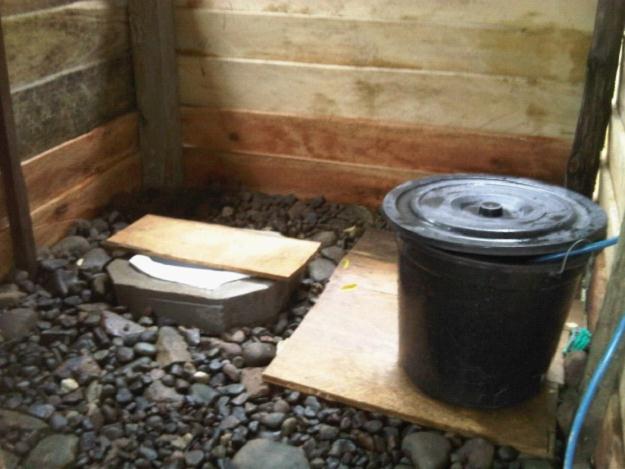
A visionary, a farmer - and a healthy village: how Galung put an end to open defecation

Despite is location just 17 kilometres from the district capital, Galung is an under-developed village in Kecamatan Barru, in the Indonesian province of South Sulawesi. 


Simple family latrine built in Galung Village
© UNICEF Indonesia / Gerber
140 families out of a total 484 households in the village haven’t had access to proper latrines for some time, although efforts have been made to promote better hygiene in the village. However, demand for proper sanitation has been high, frustrated mainly by low incomes prevention the construction of latrines. Despite that challenge, Galung has just been declared the first village in the district to be “open-defecation free” – meaning no families go to the toilet in the open.

This success has been determined by the fact that the village head has great interest in sanitation, and there is a creative local entrepreneur/village artisan who has been able to build cheap latrines. 

Friday, 8 March 2013

The dark of day: life in a Jakarta urban slum

In the mornings, Neng helps her mum on the family food stall
© UNICEF/Indonesia 2012/Andy Brown
Neng is fourteen years old. She lives and works on Venus Alley, a lane in the notorious Jembatan Besi slum in Jakarta, Indonesia. Unlike other children her age, she rarely gets to see the sun. The slum is one of the most densely populated in Indonesia, rising to four stories in places. The ground floor homes are reasonably well constructed but as they ascend, they become increasingly makeshift, with walls and floors made from wood and scrap metal.