Showing posts with label children. Show all posts

Tuesday, 24 January 2017

Designing Solutions for Indonesia’s Children in the Age of Haze

By Cory Rogers, Communication Officer

©Center for International Forestry Research/2014
 
Jakarta: When Indonesia’s yearly agricultural fires start up each fall, belching acrid haze through Borneo, Sumatra and over borders, the air one breathes becomes a health hazard unto itself: Schools shut down, thousands fall ill, and some will die from respiratory ailments.

Few dispute that haze is deadly, but solutions have been slow in coming, leaving millions of (mostly) rural Indonesians exposed to harm. Indeed, despite land and forest burning laws passed following the 2015 El Niño-powered haze (an event that one study says may have caused 100,000 premature deaths), haze returned in 2016. There is a clear need for new ideas.

Monday, 16 June 2014

Ferry Salim celebrates 10 years with UNICEF

by Sarah Grainger

Ferry Salim on a trip to Aceh with UNICEF in 2012. 
© UNICEF Indonesia/2012

JAKARTA, Indonesia, June 2014 - Actor, model and entrepreneur Ferry Salim is celebrating 10 years as UNICEF Indonesia’s National Ambassador.

It was June 2004, when UNICEF approached him and asked him if he would be prepared to work as an advocate for children’s rights.

A father of three children, he readily agreed.

Just six months later, the Indian Ocean tsunami struck northern Sumatra as well as Thailand, Sri Lanka, India and many other countries, leaving 230,000 people dead.

Wednesday, 11 June 2014

Sports for Development

Millions of eyes will be on Brazil this week when the international footballing elite meet for the World Cup finals. Football is hugely popular in many countries and there’s no doubt that sport is a unifying force. But not every child has access to physical education, games and sports. In Indonesia, traditionally most schools do not consider physical education a priority. Children with special needs are often unable to take part in the sports on offer. And many teachers think cleaning or gardening are adequate “sports” for girls.

Playing sports and games is good for children’s health. It also teaches skills like team work and improves speed, agility and perception. Four years ago, UNICEF, in cooperation with the Ministry of National Education, began work to improve access to inclusive physical education, sports and play in Indonesia. The Sports for Development programme was introduced in one district in each of four different provinces - Jakarta, West Java, East Java and South Sulawesi.

UNICEF has helped to train teachers from these provinces in how to build sports into the school timetable. The teachers have been introduced to games which special needs pupils and other students can play together. They have also learned how to make sports equipment out of cheap, readily available materials. UNICEF is producing a number of materials so that the Sports for Development programme can be replicated in other districts across the country.


Tuesday, 25 March 2014

Indonesia: In one girl’s recovery, an island’s triumph over malaria


By Nuraini Razak


An island once suffering from a record number of malaria cases has managed to eradicate all indigenous cases of the disease, which is a leading cause of death among children under age 5.

SABANG, Indonesia, 19 March 2014 – When Adelia’s fever simply did not go down, she was tested for the second-most-common malaria parasite – malaria vivax. That was in 2011. Thanks to immediate and effective treatment, Adelia, who is now 9 years old, managed to recover fully. But many others before her were not so lucky.

“On Sabang island, basically everyone had malaria at one point in their lives. We were so used to it,” Adelia’s mother, Rahmawati, explains. “But when it happens to one of your own children, I must say, I was terribly worried.”

“In 2008, we started working with UNICEF to eliminate malaria,” says Dr. Titik Yuniarti, Head of Communicable Disease Control in the district health office, “and today, we can claim that we no longer have any indigenous cases on the island.”

At one point, Batee Shok, the village Adelia and her mother call home in Aceh province, broke all records, with the highest number of malaria cases to be registered in a single village in Sabang.

Monday, 18 November 2013

Typhoon Haiyan: Jhana and Gwendolyn's story

Jhana with her UNICEF hygiene kit in Tacloban
© UNICEF Philippines/2013/Kent Page

Our Lady of Perpetual Help Church in Tacloban has become a makeshift home for 300 families whose homes were wiped out by Super Typhoon Haiyan. Among them is 20-year old Jhana, a proud new mother of a very special daughter, Gwendolyn.

Gwendolyn was born just one week before Haiyan struck. "The typhoon washed away our home" says Jhana , as she breast feeds Gwendolyn amongst the hundreds of others sheltered amongst the church pews. "But she is my angel and I will do everything to make her life beautiful."

Friday, 15 November 2013

Typhoon Haiyan diary: Mud and ruin in Tacloban

By Nonoy Fajardo, Disaster Risk Reduction and Emergency Specialist


A boy displaced by Typhoon Haiyan in the city of Tacloban, Philippines
© UNICEF Philippines/2013/JMaitem 

I have been working on emergencies for more than 15 years now, and I seriously thought I had seen it all. But flying into Tacloban on Monday as part of a UN assessment team, I was in for a shock. As the plane taxied along the bare runway, I could see mud and ruin – only mud and ruin – where once there had been trees and buildings and all the normal signs of life.

Yes there was still a tarmac runway, but that was all that was there: a runway. Everything that had once been inside the terminal buildings was now outside, and what had been outside was now inside, even including a flight of stairs. We were told to avoid parts of the ruined buildings because there were still bodies in the rubble, where airport employees had sought refuge.

Typhoon Haiyan diary: Aid is getting through

By Christopher de Bono (Regional Chief of Communication, UNICEF East Asia and Pacific)


A child displaced by Typhoon Haiyan in an evacuation centre in Tacloban
© UNICEF Philippines/2013/JMaitem

It’s day four since Typhoon Haiyan hit, and the good news is aid is getting through. And I’m proud to say that UNICEF’s water and sanitation supplies – the aid category that we are leading on – are now in Tacloban, where they will help us avoid the much-feared outbreaks of typhus and cholera. Other agencies are leading on food, shelter and medicine.

The bad news is that not enough is getting through. Despite the amazing, tireless efforts of the Philippines Government and army, and all my colleagues in the aid community, we are still not reaching everyone in dire need.

Wednesday, 13 November 2013

Typhoon Haiyan diary: "There is nowhere to go"

Written by Chris de Bono

A mother carries her daughter as they walk in Tacloban, Leyte, Philippines
© UNICEF Philippines/2013/JMaitem

I just got off the phone with Leon Dominador Fajardo, or 'Nonoy' for short, a UNICEF Emergency Specialist in Tacloban City. He is a thorough professional – an old hand who has seen disasters and devastation before, but there was a quiver in his voice. “People, families with children are walking along the ruined roads,” he said. “I don’t know where they are going – there is nowhere to go. They are walking because their homes are gone and they have nowhere to go.”

It had taken him a hour to get out of the airport because of the debris. Some other colleagues had been stuck in the airport overnight. The roads are almost impassible in the pitch black night and the risk of accidents is very real – to drivers and passengers but more importantly to people camping on the street.

Tuesday, 9 July 2013

After the earthquake in Aceh, Indonesia – Putting a smile on children’s faces through learning and playing

Yusniate engages her daughter Liana
with a puzzle game inside UNICEF's
temporary learning centre.
© UNICEF Indonesia / 2013 / Juanda
BENER MERIAH, Indonesia, 9 July 2013 - "It was like kiamat, doomsday," – that’s how Yusniati (25), a coffee farmer from Serempah, Ketol, recalls what happened on 2 July when a powerful earthquake measuring 6.2 on the Richter scale ravaged villages in Bener Meriah and Aceh Tengah district in Indonesia. The quake in the province of Aceh left 39 people dead and more than 2,400 people injured.  "We were in the plantation, and we could feel the earth moving up and down.  The sound was incredibly loud," she says.

About 50,000 people from more than 12,000 households in over 70 different locations in the two districts have left their homes.  This includes families whose houses have not been damaged but who still prefer to camp outside, in fear of aftershocks.  Around one third of those affected are children, younger than 18 years of age.

“After what felt like 5 minutes of shaking, I saw friends and neighbours running around.  We saw some people trapped and crying for help.  Many people were bleeding, but we helped each other and finally we managed to move to an open space.  We were shocked and confused, and we still are," Yusniati adds.

Tuesday, 2 July 2013

How a volunteer is preventing violence against children at school in Central Java

Erry in one of his group discussion
sessions on violence prevention.
© UNICEF Indonesia/2012.
Preventing violence in schools is complicated and takes a strong vision, specialist knowledge, experience and patience.  UNICEF cannot do this alone and therefore works with the government and local non-government partners (NGOs). An army of volunteers is also playing a hugely important  role.

A fabulous example of this is Erry Pratama Putra – a man of 37 years from Klaten in Central Java, Indonesia. He first became involved with UNICEF six years ago, when he volunteered during the emergency response after the earthquake in Yogyakarta and Klaten.

“It is our responsibility to ensure children are fully protected from all forms of violence, whether at home, in school or in the community. I don’t have anything to offer except my heart, my soul, my mind, my spirit and my idealism to create a decent world for children as their future is entrusted to us today.”

Tuesday, 4 June 2013

It’s about abilities – UNICEF Indonesia launched the State of the World’s Children report 2013 on children with disabilities


Joining forces with gold medal winners at the Special Olympics and key activists for the rights of people with disabilities, UNICEF Indonesia launched this year’s State of the World’s Children report, together with the Minister of Social Affairs and other government counterparts on May 30th 2013.

“When talking about children with special needs, we often rather think about what they are NOT able to do, rather than looking at what they actually CAN contribute to society,” said UNICEF Representative Angela Kearney during the event at the disability-friendly Ministry building in downtown Jakarta. “This needs to change. Like in many other countries, children with disabilities are amongst the most marginalized and invisible children in Indonesia. Often parents simply hide them away, because they are ashamed or they don’t know how best to support them.”

Angela Kearney with Special Olympics gold medalists, Adi (left) and Stephanie (right)
© UNICEF Indonesia / 2013 / Klavert

Wednesday, 15 May 2013

Oral Rehydration Salts and Zinc: Simple but big solution to save children’s lives.


Veronica became very weak
as dehydration set in
©UNICEF Indonesia/2013/Rob Patmore
It was early morning in the town of Tambolaka on the Indonesian island of Sumba when Teresia and her husband rushed their daughter for treatment. Veronica was very weak and in need of lots of fluids. When she started vomiting and having loose stools, an Angkot (mini bus) driver immediately took them to sought help at the local hospital.

Veronica is a 1.5 year old girl, who became weak with every passing hour as the diarrhea continued and dehydration set in. Her mother Teresia watched, tenderly pressing Veronica close to her, hoping to somehow save her daughter’s life.

“We were very scared and worried,” says Teresia. “We have heard that children can die from just diarrhoea,” she adds while looking at her daughter. One of the health workers arrived with a small sachet of oral rehydration salts. She was also given Zinc tablet diluted in a teaspoon of water, which will help her fight a potentially deadly case of diarrhoea.

Tuesday, 30 April 2013

Malaria, a mother's greatest fear


6-year-old Eta and her mother Deborah
© UNICEF Indonesia / 2013 / Rob Patmore
There is no worse feeling for a mother than to think that her child might die.Yet, in Sumba, one of Indonesia’s islands in East Nusa Tenggara, too many mothers have watched their children dying from malaria. Malaria is infected through mosquito bites which are endemic in the island.

Deborah knows too well about this feeling. Her daughter, Eta, had such a high fever one night that she was shaking. “I thought she was going to die,” Deborah recalled how horrible she felt that night.

Eta was taken to the nearest health centre where her blood was tested. It was confirmed that she caught malaria. And it was one of the worst kinds.

Monday, 15 April 2013

Being malaria-free will also benefit the tourism industry


“I have really understood the issues related to malaria”, says Mr. Thamrin Wata, the Culture and Tourism Officer of South Sulawesi province in Indonesia. “It is very important for my work to know about this disease, because it is crucial for us to protect our tourist destinations from malaria to make them more attractive for travellers. Before I joined this malaria working group, I thought that tourism is only related to sexually transmitted diseases and HIV infections. But now I have realized that malaria plays also a role.

A baby sleeps under a bed net in Selayar district
© UNICEF Indonesia / 2012 / Asri
Mr Thamrin Wata has been working in the Tourism Office of South Sulawesi province since 1990. During all this time, he never received clear information about malaria and so he did not consider malaria a serious disease one needs to be scared of.

In October 2012, Mr. Thamrin Wata attended a workshop about malaria in Makassar sponsored by UNICEF in collaboration with the Provincial Health Office South Sulawesi. In this workshop he learned that malaria is a dangerous disease, especially in children and pregnant women, if not correctly managed by health workers. It is also a problem for holiday destinations, because tourists, especially foreigners, are scared of malaria infections and prefer to travel to areas that are free from malaria. As this directly relates to his work for the Tourism Office of South Sulawesi, Mr. Thamrin Wata decided to become a member of the malaria working group.

Tuesday, 26 March 2013

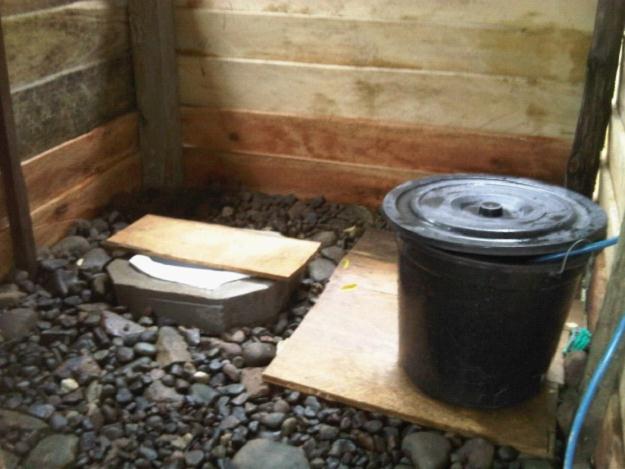
A visionary, a farmer - and a healthy village: how Galung put an end to open defecation

Despite is location just 17 kilometres from the district capital, Galung is an under-developed village in Kecamatan Barru, in the Indonesian province of South Sulawesi. 


Simple family latrine built in Galung Village
© UNICEF Indonesia / Gerber
140 families out of a total 484 households in the village haven’t had access to proper latrines for some time, although efforts have been made to promote better hygiene in the village. However, demand for proper sanitation has been high, frustrated mainly by low incomes prevention the construction of latrines. Despite that challenge, Galung has just been declared the first village in the district to be “open-defecation free” – meaning no families go to the toilet in the open.

This success has been determined by the fact that the village head has great interest in sanitation, and there is a creative local entrepreneur/village artisan who has been able to build cheap latrines. 

Friday, 8 March 2013

The dark of day: life in a Jakarta urban slum

In the mornings, Neng helps her mum on the family food stall
© UNICEF/Indonesia 2012/Andy Brown
Neng is fourteen years old. She lives and works on Venus Alley, a lane in the notorious Jembatan Besi slum in Jakarta, Indonesia. Unlike other children her age, she rarely gets to see the sun. The slum is one of the most densely populated in Indonesia, rising to four stories in places. The ground floor homes are reasonably well constructed but as they ascend, they become increasingly makeshift, with walls and floors made from wood and scrap metal.

Thursday, 26 July 2012

Farhan supports Indonesian children


Muhammad Farhan (presenter and radio announcer) explains why he supports UNICEF Indonesia and its work for Indonesian children.