Showing posts with label child rights. Show all posts

Monday, 20 March 2017

Planting PAUD Hope in Papua

By: Cory Rogers, Communication Officer


Sorong, Papua Province, Indonesia -  Just 15 minutes east of the Sorong port sits STIKP Muhammadiyah Sorong, a serene teacher’s college awash in the blues of the sea.

Between two mid-campus ponds, Herman, a third-semester student at the college, winces as he relays an early school memory.
 
“We often didn’t even have paper to use [at school],” he says, one hand twirling pen strokes, the other scratching an ear. “So we took notes on our thighs instead.”
 
Peers were left to wonder: How many words even fit on a five-year-old’s knee?
 
“I want to return home after graduating [to teach],” Herman continued. “You know, half the time, the teacher didn’t even bother to show up.”

Friday, 10 March 2017

A City Belongs to Children: How Surakarta Establishes Its Trademark as a Child-Friendly City

By: Kinanti Pinta Karana, UNICEF Indonesia Communication Specialist

From left to right: UNICEF Indonesia Representative Gunilla Olsson, the Mayor of Surakarta Hadi ‘Rudy’ Rudyatmo and the UN Special Representative of the Secretary General Marta Santos Pais Photo ©UNICEF Indonesia/Kinanti Pinta Karana

Surakarta in central Java, earns a lot of praise for its commitment to put children at the centre of its policies. The city has been in a partnership with UNICEF since 2002 to improve child protection, with birth registration as a priority. In 2015, Surakarta received the Child Friendly City Award from President Joko Widodo, the city’s former mayor. In the last days of February, the UN Special Representative to the Secretary General (SRSG) for Violence against Children, Marta Santos Pais paid the city a visit along with several UNICEF staff including Representative Gunilla Olsson, to see how things are being done.

Monday, 24 November 2014

Indonesia and UNCRC: 25 years of progress and challenges.

A note from an activist-researcher.

Irwanto, Ph.D.
Professor, Faculty of Psychology - Atma Jaya Catholic University
Co-director, Center on Child Protection - Faculty of Political and Social Sciences, University of Indonesia


Indonesia has made significant progress to implement the Convention on the Rights of the Child (CRC) in the past two decades but serious challenges remain. To understand what has been achieved and the remaining and emerging challenges, let us walk through the CRC’s history in Indonesia.

The UNCRC was ratified by the Republic of Indonesia on 5 September 1990. The ratification, however, was performed in an ad hoc and pragmatic manner to avoid difficult political hurdles in the House of Parliament Although unusual, the decision to ratify the Convention by a Presidential Decree (number 36, 1990) was accepted by the United Nations (UN)

Moreover, the ratification was performed under the condition that the CRC and its principles were consistent with the Constitution of the Republic of Indonesia from 1945 which meant ratification with a number of reservations. These reservations were subsequently withdrawn in 2005.

Saturday, 9 August 2014

Punk rock in prison - children dream about life after detention in Klaten

by Lauren Rumble, Chief, Child Protection, Indonesia

In July, I travelled to Klaten district to visit children in prison.

I was impressed by their dedication to learning, even though the teachers allocated to the prison school often don’t come and health services are erratic. The children, all of them boys, dream of continuing their education and leading productive lives in their community upon release.

“I just want to go back to school when I get out,” said Hadi*. In prison, the boys have been learning art, music, drama and practical skills like printing. The boys are selling their work as part of an NGO-supported project to promote their return to community life.

Friday, 20 June 2014

Children in Makassar speak out on violence

by Lauren Rumble, Chief, Child Protection, UNICEF Indonesia

Michelin is 17 years old and is the President of the Child Forum in Makassar. I met her in May this year on my first visit to Makassar, along with other leaders of the Forum, and I asked them about their opinions on violence against children in the city.

She believes that violence against children, especially child trafficking and sexual violence against children living and working on the streets are major concerns for Makassar’s children.

“Not enough is being done about these issues,” she says.

Tuesday, 25 March 2014

Indonesia: In one girl’s recovery, an island’s triumph over malaria


By Nuraini Razak


An island once suffering from a record number of malaria cases has managed to eradicate all indigenous cases of the disease, which is a leading cause of death among children under age 5.

SABANG, Indonesia, 19 March 2014 – When Adelia’s fever simply did not go down, she was tested for the second-most-common malaria parasite – malaria vivax. That was in 2011. Thanks to immediate and effective treatment, Adelia, who is now 9 years old, managed to recover fully. But many others before her were not so lucky.

“On Sabang island, basically everyone had malaria at one point in their lives. We were so used to it,” Adelia’s mother, Rahmawati, explains. “But when it happens to one of your own children, I must say, I was terribly worried.”

“In 2008, we started working with UNICEF to eliminate malaria,” says Dr. Titik Yuniarti, Head of Communicable Disease Control in the district health office, “and today, we can claim that we no longer have any indigenous cases on the island.”

At one point, Batee Shok, the village Adelia and her mother call home in Aceh province, broke all records, with the highest number of malaria cases to be registered in a single village in Sabang.

Tuesday, 30 April 2013

Malaria, a mother's greatest fear


6-year-old Eta and her mother Deborah
© UNICEF Indonesia / 2013 / Rob Patmore
There is no worse feeling for a mother than to think that her child might die.Yet, in Sumba, one of Indonesia’s islands in East Nusa Tenggara, too many mothers have watched their children dying from malaria. Malaria is infected through mosquito bites which are endemic in the island.

Deborah knows too well about this feeling. Her daughter, Eta, had such a high fever one night that she was shaking. “I thought she was going to die,” Deborah recalled how horrible she felt that night.

Eta was taken to the nearest health centre where her blood was tested. It was confirmed that she caught malaria. And it was one of the worst kinds.

Monday, 15 April 2013

Being malaria-free will also benefit the tourism industry


“I have really understood the issues related to malaria”, says Mr. Thamrin Wata, the Culture and Tourism Officer of South Sulawesi province in Indonesia. “It is very important for my work to know about this disease, because it is crucial for us to protect our tourist destinations from malaria to make them more attractive for travellers. Before I joined this malaria working group, I thought that tourism is only related to sexually transmitted diseases and HIV infections. But now I have realized that malaria plays also a role.

A baby sleeps under a bed net in Selayar district
© UNICEF Indonesia / 2012 / Asri
Mr Thamrin Wata has been working in the Tourism Office of South Sulawesi province since 1990. During all this time, he never received clear information about malaria and so he did not consider malaria a serious disease one needs to be scared of.

In October 2012, Mr. Thamrin Wata attended a workshop about malaria in Makassar sponsored by UNICEF in collaboration with the Provincial Health Office South Sulawesi. In this workshop he learned that malaria is a dangerous disease, especially in children and pregnant women, if not correctly managed by health workers. It is also a problem for holiday destinations, because tourists, especially foreigners, are scared of malaria infections and prefer to travel to areas that are free from malaria. As this directly relates to his work for the Tourism Office of South Sulawesi, Mr. Thamrin Wata decided to become a member of the malaria working group.

Tuesday, 26 March 2013

A visionary, a farmer - and a healthy village: how Galung put an end to open defecation

Despite is location just 17 kilometres from the district capital, Galung is an under-developed village in Kecamatan Barru, in the Indonesian province of South Sulawesi. 


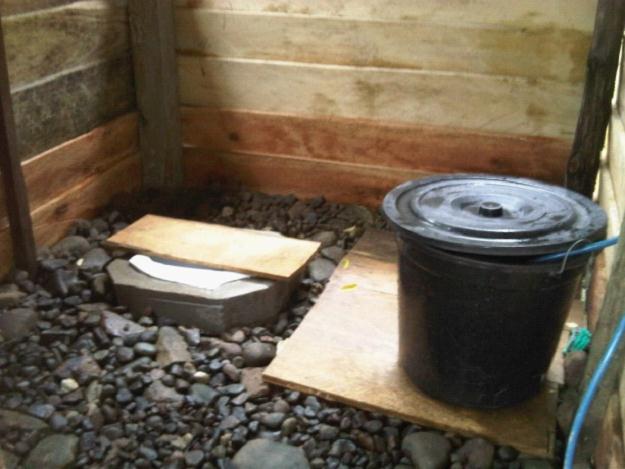
Simple family latrine built in Galung Village
© UNICEF Indonesia / Gerber
140 families out of a total 484 households in the village haven’t had access to proper latrines for some time, although efforts have been made to promote better hygiene in the village. However, demand for proper sanitation has been high, frustrated mainly by low incomes prevention the construction of latrines. Despite that challenge, Galung has just been declared the first village in the district to be “open-defecation free” – meaning no families go to the toilet in the open.

This success has been determined by the fact that the village head has great interest in sanitation, and there is a creative local entrepreneur/village artisan who has been able to build cheap latrines. 

Friday, 8 March 2013

The dark of day: life in a Jakarta urban slum

In the mornings, Neng helps her mum on the family food stall
© UNICEF/Indonesia 2012/Andy Brown
Neng is fourteen years old. She lives and works on Venus Alley, a lane in the notorious Jembatan Besi slum in Jakarta, Indonesia. Unlike other children her age, she rarely gets to see the sun. The slum is one of the most densely populated in Indonesia, rising to four stories in places. The ground floor homes are reasonably well constructed but as they ascend, they become increasingly makeshift, with walls and floors made from wood and scrap metal.