Showing posts with label child health. Show all posts

Thursday, 22 October 2015

A Malnutrition Crisis in NTT

Lukas faces an uncertain future. ©RayendraThayeb/ACF

Meet Lukas. The two-year-old from Oebola Dalam village in NTT struggles to play, walk and sometimes even stand up. He is very weak and noticeably thin.

A visiting health worker recently found the circumference of Lukas’ arm to be a mere 10.8cm – confirming that he suffers from “severe acute malnutrition.” This means Lukas is highly vulnerable to disease, and even death.

Lukas’ father explains the economic condition of his family: “We rely on growing and selling produce from a small garden. It gives us an income of about IDR 200,000 each month (approx. USD 16),” he says. “So I can only provide two meals a day for my family.”

Monday, 19 October 2015

Mobile phones saving lives

 
Midwife Maena Nhur Desita administers a vaccine ©UNICEF Indonesia/2015

Kedoya Utara is one of the poorer neighborhoods in Jakarta. Sitting between megamalls and skyscrapers, this area struggles with makeshift living conditions, polluted waterways and unreliable electricity.

There is one subject of particular concern in Kedoya Utara – immunization rates among children are very low. This puts them at the risk of contracting life-threatening diseases such as measles and diphtheria.

“There is an equity gap in Jakarta and around Indonesia – children from poor families, especially those in slum areas, are not reached regularly for their full vaccination doses,” UNICEF Indonesia Health Specialist Dr. Kenny Peetosutan says.

Friday, 29 August 2014

Working together to save mothers and babies in Sulawesi


Ratna with her son Ralvin at the local health centre in Galesong
©UNICEF Indonesia/2014/Ramadana
GALESONG, South Sulawesi, August 2014 - It was ten o’clock at night when Ratna Adam started to feel labour pains. She was at home in the seaside village of Galesong, Takalar District in South Sulawesi. Her fisherman husband was away working in Kalimantan, so the first person she called was Basse Cama, a Traditional Birth Attendant (TBA).

Ibu Basse has been helping women in Galesong give birth for 33 years and is a respected member of the community. She lives about a five minute walk from Ratna, so she hurried over to help the expectant mother.

Monday, 7 July 2014

Muslim leaders at forefront of social change to reduce stunting

 by Iwan Hasan


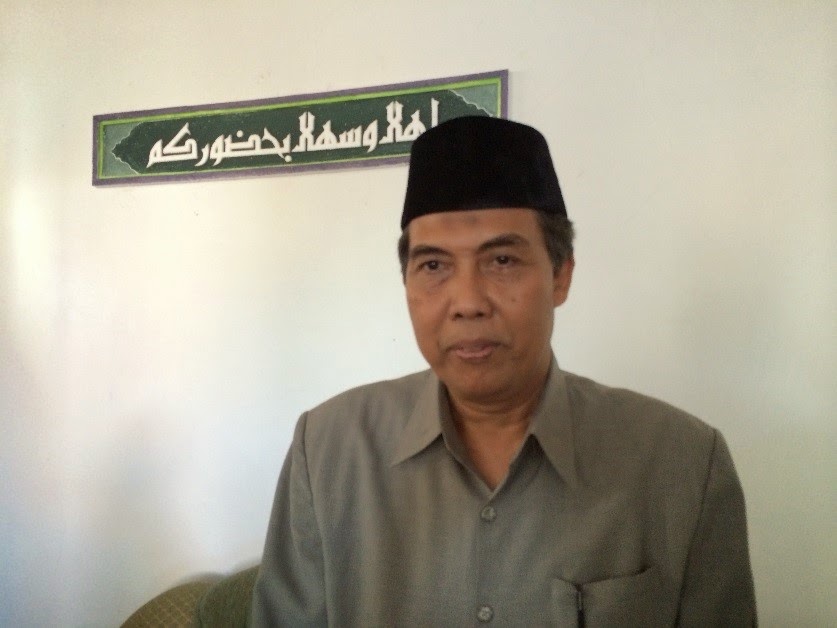
Kyai Subhan at the pesantren in Brebes, Central Java
© UNICEF Indonesia/2014/Iwan

BREBES, Indonesia, April 2014 - Subhan Makmun, known as Kyai Subhan, looks like a typical traditional Islamic scholar or ulama. He lives among thousands of his students in an Islamic boarding school in Brebes, Central Java. He wears a traditional sarong and a black Malay cap.  

But looks can be deceiving. Subhan’s view on Islamic Syariah is very progressive. “Islam is not narrow but broad,” he says.

Kyai Subhan is one of the most revered ulamas in Central Java thanks to his vast knowledge of Islamic jurisprudence. But classical Islamic books are not the only books he reads. He says he’s read “Facts for Life”, a book on child care published by UNICEF in association with several other UN agencies.

Monday, 9 June 2014

Giving Klaten’s babies a nutritious start in life

By Anup Tiwari, Chief, Private Fundraising and Partnerships, UNICEF Indonesia

Pandes Village, Central Java, Indonesia, May 2014 - As the Chief of private fundraising and partnerships in UNICEF Indonesia's Jakarta office, I spend a lot of my time in office buildings - at my desk, in meetings or on the phone. But in early May, I found myself cross-legged on the floor of a huge bamboo building in Pandes village, Central Java, watching a group of expectant mothers play a fishing game.

I’d come with several colleagues to see one of UNICEF’s programmes in action. With the Government of Indonesia, we’ve helped to train a local midwife and several volunteers, known as cadres, to teach women about good nutrition both during pregnancy and after their baby is born. The cadres also work with fathers and older members of the community so that they can best support these new mothers.

Tuesday, 25 March 2014

Indonesia: In one girl’s recovery, an island’s triumph over malaria


By Nuraini Razak


An island once suffering from a record number of malaria cases has managed to eradicate all indigenous cases of the disease, which is a leading cause of death among children under age 5.

SABANG, Indonesia, 19 March 2014 – When Adelia’s fever simply did not go down, she was tested for the second-most-common malaria parasite – malaria vivax. That was in 2011. Thanks to immediate and effective treatment, Adelia, who is now 9 years old, managed to recover fully. But many others before her were not so lucky.

“On Sabang island, basically everyone had malaria at one point in their lives. We were so used to it,” Adelia’s mother, Rahmawati, explains. “But when it happens to one of your own children, I must say, I was terribly worried.”

“In 2008, we started working with UNICEF to eliminate malaria,” says Dr. Titik Yuniarti, Head of Communicable Disease Control in the district health office, “and today, we can claim that we no longer have any indigenous cases on the island.”

At one point, Batee Shok, the village Adelia and her mother call home in Aceh province, broke all records, with the highest number of malaria cases to be registered in a single village in Sabang.

Friday, 23 August 2013

UNICEF Indonesia and faith-based organization NU join forces to reduce stunting

UNICEF Indonesia Representative Angela Kearney and K.H Said Aqil Siradj, Chairman of NU
Jakarta, Indonesia, August 2013 – UNICEF Indonesia has signed a partnership agreement with Nahdlatul Ulama (NU), the largest Muslim organisation in the country to further enhance its efforts to improve the nutritional status of children and to reduce the high prevalence of stunting.

The collaboration will focus on addressing stunting through strengthening the government’s Conditional Cash Transfer (CCT) programme or PKH. This model is currently being piloted in two districts: Brebes in Central Java and Sikka in East Nusa Tenggara through a programme called PKH Prestasi.

For UNICEF Indonesia, this is the first formal partnership with a faith-based organisation. With an estimated number of followers of more than 50 million people, Nahdlatul Ulama is one of the largest Muslim organizations in the world. Around 60% of the population in Brebes are members of NU and the organization has enormous clout in the district. NU has affiliations in most major Islamic boarding schools (pesantren) across Indonesia, including in Brebes. NU also funds hospitals and schools, both religious and secular.

Tuesday, 30 April 2013

Malaria, a mother's greatest fear


6-year-old Eta and her mother Deborah
© UNICEF Indonesia / 2013 / Rob Patmore
There is no worse feeling for a mother than to think that her child might die.Yet, in Sumba, one of Indonesia’s islands in East Nusa Tenggara, too many mothers have watched their children dying from malaria. Malaria is infected through mosquito bites which are endemic in the island.

Deborah knows too well about this feeling. Her daughter, Eta, had such a high fever one night that she was shaking. “I thought she was going to die,” Deborah recalled how horrible she felt that night.

Eta was taken to the nearest health centre where her blood was tested. It was confirmed that she caught malaria. And it was one of the worst kinds.