Showing posts with label WASH. Show all posts

Thursday, 5 January 2017

Yogyakarta survey reveals challenges and opportunities for ensuring access to clean water and sanitation

 By Aidan Cronin, Chief of WASH, Mitsunori Odagiri, UNICEF WASH Officer, and Bheta Aryad, Social Policy Specialist, UNICEF Indonesia

Water quality sampling in Yogyakarta © UNICEF Indonesia / 2016/ Aidan Cronin


The Government of Indonesia has taken on a leading role in the South-East Asia region and globally in implementing the 2030 Agenda and its Sustainable Development Goals (SDGs). One example of this commitment are the Government’s efforts to harmonize its own Five Year Development Plan (RPJMN) agenda with SDG 6 on the universal availability of clean water and sanitation by 2030. The RPJMN 2015-2019 is even more ambitious and seeks to ensure that 100 per cent of Indonesia’s population has access to safe drinking water by the end of 2019.

There is a clear commitment to progress. But a lack of evidence is blocking the way.

To address the problem, the Central Statistics Agency (BPS), in collaboration with the Ministry of Health and the Planning Ministry BAPPENAS, carried out a Water Quality Survey in the province of Yogyakarta in September last year as part of the National Socio-Economic Survey (Susenas). It was the first time such surveys were combined.

The Water Quality Survey carried out in Yogyakarta aimed to create a detailed overview of water quality, sanitation and hygiene at the household level, and to provide a baseline estimate of Indonesia’s progress on SDG water and sanitation development targets. It also aimed to provide data on the quality of drinking water for the Government of Yogyakarta and relevant stakeholders.

Nearly 1,000 households were surveyed for the study by a BPS Yogyakarta team. Detailed water analysis, meanwhile, was conducted by the Ministry of Health’s Centre for Environmental Health Engineering and Control of Diseases (BBTKLPP), with the main focus on the detection of E.coli faecal contamination. 

The analysis concluded that 89 per cent of source water samples were contaminated with E.coli; this despite high levels of access to an “protected water source”. The finding suggests that even protected drinking water sources remain at high risk of faecal contamination.

Around 67.1 per cent of samples of household drinking water, measured at the point of consumption, were found to be contaminated with E. coli. While boiling water was able to reduce the level of contamination, it was not found to eliminate traces of the bacteria altogether.

These two figures are of course very worrying. High levels of faecal contamination in source and household drinking water were found to correlate with poverty, rurality and low education levels, highlighting an urgent need for targeted interventions for the most vulnerable. The proportion of households with access to safely managed drinking water and sanitation facilities, as per the definition of the SDGs, were estimated at 8.5 per cent and 45.5 per cent, respectively. 

The survey team had to master additional tasks including delivering an additional dedicated water quality questionnaire along with taking water samples from the source and at the point of consumption in the house and then delivering the samples to the laboratory within 4 to 6 hours.  All these efforts have contributed to making Indonesia one of the few countries committed to establishing a baseline understanding of water safety in the country. For this the Government deserves to be further commended.

The report, launched by the Minister of BAPPENAS, Bambang Brodjonegoro, the Head of BPS, Kecuk Suhariyanto and UNICEF Representative Gunilla Olsson, recommends that the study be replicated in other provinces, and advises local governments to implement routine water-quality testing. It also urges improved coordination between central and local levels of government to seize on the new opportunities for progress that have been identified.


UNICEF is proud to have been able to provide technical support for such an important endeavour, as safe water is a key contributor to public health, and particularly to children’s health.


We know that over 40 per cent of infant deaths, for example, are caused by two killers: diarrhoea and pneumonia. We also know that water, sanitation and hygiene -- especially handwashing with soap before eating and after using the toilet -- can drastically cut these numbers. Studies have shown that the improvement of the water quality can reduce diarrhoea incidence by up to 30 per cent.


It has also become clear that water, sanitation and hygiene plays a crucial role in reducing malnutrition. Indonesia has a severe stunting problem, with 37 per cent of all children under five being stunted or too short for their age, constraining cognitive development and productivity later in life. A recent UNICEF study showed that children whose families lacked safe drinking water and proper sanitation were at a heightened risk of stunting.


“During the MDG period (2000-2015), Indonesia successfully reduced the proportion of people lacking access to a safe water sources by more than half. That is an incredible accomplishment. Today, the Sustainable Development Goals (SGDs) have shifted the emphasis from the source to the safety of the water. Doing so offers a unique opportunity to move ahead, as no SDG will be considered met if it is not met for all, everywhere.


The water quality survey proves we know how to chart a way forward, even if the road ahead is long.


To see a short Youtube clip on the this work please go to

Bahasa Indonesia: https://youtu.be/eBGd6fjHg4I

Friday, 8 July 2016

Sanitation as a matter of religious importance

By Aidan Cronin, Chief WASH, UNICEF Indonesia


It was a rare sight: members of the Indonesian Council of Islamic Scholars (in Indonesian known as Majelis Ulama Indonesia) in their distinctive peci hats sat alongside Government health officials from 13 provinces of Indonesia to discuss an unconventional topic: toilets.

Organised by the Minister of Health, the meeting unveiled an innovative approach to improve sanitation in Indonesia – a Fatwa, or Islamic decree by the Council which stresses the importance of good sanitation facilities and hygiene practices. The decree also allows the use of the Council’s charity funds (Zakat) to provide financial support to the poorest and most vulnerable families for better latrines.

Indonesia has a huge problem with open defecation, where people do not defecate in a toilet but in the open, on the beach, into river and so on. A WHO/UNICEF Report (2015) estimates that over 51 million people do not use latrines in the country – the second highest number in the world. However, open defecation is practised mostly by the poorest populations and they bear the heaviest burden. In particular, children - already vulnerable and marginalized - pay the highest price in terms of their survival and development.

Thursday, 26 May 2016

Finding inspiration in the field

By Gabé Hirschowitz, UNICEF Next Generation in Los Angeles


While drinking my bottled water as I sit down to write this blog post, I am instantly reminded of the children I met in Kupang who walk twice a day for two hours (once in the morning before school, and once in the afternoon after school) to collect clean water for their families.

Four hours per day. How could this be? How is this fair?  Why is clean and safe drinking water not readily available to children and families around the world?

These are just some of the many thoughts running through my mind as I choke up thinking about the world water crisis that so many individuals face on a daily basis. Every single being has the right to clean water. It’s shocking that so many go without it in 2016.

Monday, 11 January 2016

Preaching About Poo: Open Defecation in Sumba

By Nick Baker, Communication and Knowledge Management Officer

Reverend Charles Detha educates villagers on an uncomfortable topic. ©UNICEF Indonesia/2015/Nick Baker

A local pastor in Kadahang village, Sumba (NTT) is about to make the most unlikely of sermons. Today, Reverend Charles Detha won’t talk to his congregation about chastity or charity. Instead, he will talk about defecating.

Indonesia is in the grips of an open defecation crisis. More than 51 million people do not use a toilet. This is the second highest number in the world after India. The effect on communities and particularly on children is severe – with the practice resulting in a raft of health problems.

The island of Sumba is greatly affected by this crisis. And an issue of such scale requires innovative solutions. So UNICEF is working directly with religious leaders in this particularly devout region to help get the message out.

“We now know that open defecation is dangerous for the health of children,” says Reverend Charles, who has been participating in programmes facilitated by UNICEF that aim to put an end to open defecation. “It can give them all sorts of diseases. So we must get involved, we must speak up.”

Monday, 4 January 2016

Building Toilets, Saving Lives

By Nick Baker, Communication and Knowledge Management Officer

Vikensa Hamakonda’s future is a little brighter. ©UNICEF Indonesia/2015/Nick Baker

Ten-month-old Vikensa Hamakonda looks curiously at the latest addition to his family home. It’s an outdoor toilet built from bamboo and tin. But this simple structure may end up saving Vikensa’s life.

On the island of Sumba (NTT), open defecation has been an accepted practice for as long as most people here can remember. Unbeknownst to many, this is endangering the lives of countless children in the region.

The pathogens from faeces left in the open can easily enter a community’s food and water chain. This leads to a raft of health problems, which particularly affect children.

Around Sumba there are stories of young children dying from diarrhea  – which can be caused by poor sanitation.  It also impacts on their growth as poor sanitation is linked to high rates of malnutrition.

UNICEF is supporting a number of programmes to end open defecation in Sumba. One of these is helping local health workers to hold “triggering sessions”. Triggering sessions are health and sanitation workshops that are conducted in individual villages. They involve dramatic demonstrations of how faeces in the open can make children sick.

A triggering session was recently held at Vikensa’s village. His father, Letu, attended. “It was a very powerful experience,” he says. “I learnt how germs from faeces from outside my house could get back into my family’s food.” The final message was simple: build and use a toilet.

The event had a lasting impact on Letu. Previously, his family would defecate in a small area behind their house. But not anymore. Letu has built a toilet. And many other villagers are doing the same.

This means that children like Vikensa will help get the best possible start to life.

Tuesday, 3 November 2015

Wins4Girls: Voices from the Field - Improving menstrual hygiene management in schools

Background


Menstrual hygiene remains a taboo in many settings, with poor knowledge and misconceptions as great a challenge as access to adequate facilities. In recent years, a solid body of evidence has revealed the discriminatory nature of many school environments, with menstruating girls unable to adequately manage their monthly menses with safety, dignity and privacy. Further compounding the problem is the lack of a positive enabling at all levels, from national policies to local school regulations. In recognition of the positive impact on girls’ education, initiatives around the world are addressing adolescent girls’ menstrual hygiene management (MHM) needs in coordination with ongoing efforts to improve water, sanitation and hygiene (WASH) facilities and knowledge gaps.

Since March 2014 the Canadian Department of Foreign Affairs, Trade and Development (DFATD) has been funding the project ‘WASH in Schools for Girls: Advocacy and Capacity Building for MHM through WASH in Schools Programmes’ (also known as the Wins4Girls Programme). Phase I involved the development and delivery of a web-based course to strengthen capacity of national research partners, WASH practitioners and policymakers to carry out rigorous research on MHM. Participants from 14 countries (Afghanistan, Bolivia, Burkina Faso, Eritrea, Ghana, India, Indonesia, Kyrgyzstan, Mongolia, Nepal, Niger, Nigeria, Pakistan and Zambia) took part in the WinS for Girls E-Course. Each of the 14 countries is currently conducting MHM research in schools. The results will inform the development of interventions to improve WinS for Girls.

To document the successes, challenges and lessons learned during the research undertaken in Indonesia, Jeff Sinden (UNICEF Consultant) spoke with Aidan Cronin (WASH Chief) and Claire Quillet (WASH Specialist) from UNICEF’s Indonesia Country Office.

Wednesday, 11 March 2015

A better future – ending open defecation in Sumba

- By Nick Baker, Communications and Knowledge Management Officer - 

One year old Juan with his new toilet. ©UNICEF Indonesia/2015/Nick Baker

SUMBA BARAT DAYA, March 2015 – Juan Ngongo, currently just one year old, will be the first person in his family to grow up with a toilet.

Juan lives in the village of Watu Kaula on the island of Sumba (NTT). For generations, his family would defecate in or around a small river that runs just beside their house.

But not anymore. Juan’s family recently attended a triggering session in their village that was facilitated by UNICEF. During these events, health workers demonstrate how easily bacteria from faeces can enter the food chain and cause a raft of health problems.

These health problems include diarrhoea and pneumonia – which are chief contributors to more than 370 under-five deaths per day in Indonesia.

Monday, 26 January 2015

An Uncomfortable Topic

Nick Baker, Communication and Knowledge Management Officer

JAKARTA, 14 January 2015 - My first press conference at UNICEF Indonesia was one I will not soon forget. Why? Because attending journalists were aged from nine to 12 years old and the main subject was poo.

Ten students participating in Media Indonesia’s Reporter Cilik (Young Reporter) Programme were invited to interview a UNICEF Officer to learn more about an uncomfortable topic - open defecation.

More than 54 million Indonesians defecate in the open, because they don’t have a latrine or a toilet. It’s the second highest number of any country in the world. Only India has a higher number.

Monday, 24 November 2014

UNICEF Indonesia launches Tinju Tinja Campaign to knock out open defecation

Melanie Subono and Aidan Cronin launches the Tinju Tinja campaign in Jakarta during World Toilet Day (19/11/2014)

JAKARTA 24 November 2014 – UNICEF Indonesia, and local rock star and humanitarian activist Melanie Subono are taking the fight against open defecation to the boxing ring through a multi-media campaign called Tinju Tinja (“Punch the Poo”), launched on World Toilet Day.

Largely conducted on social media, this campaign aims to inform and raise awareness about the health implications of such practice, as well as creating a sense of urgency to end open defecation in Indonesia in a new, innovative way. 

During the launch UNICEF revealed that, based on the Joint Monitoring Program report (2014), published by UNICEF and the World Health Organization (WHO), 55 million people in Indonesia practice open defecation, making it the second highest number in the world after India.

Wednesday, 13 August 2014

Sanitation in Alor – spreading the message, tracking its progress

By Sarah Grainger

7-year-old Novianti with her mother Amelia above the beach near their house
© UNICEF Indonesia/2014/Sarah Grainger

FUNGAFENG, NTT province, Indonesia, April 2014 - Novianti Atafan, 7, was one of the last children in her village to get a latrine at home. She lives in the seaside village of Fungafeng on Alor island in Nusa Tenggara Timur province (NTT). The family has a traditional lopo house made of bamboo and wood with a steep, thatched roof where the family sleeps.

Novianti and her mother, father, grandfather and 5 older siblings used to get up each morning and scramble down the slope behind the wooden structure to the beach below to defecate.

All that changed when a sanitarian – a local health worker who specialises in sanitation and hygiene – visited the village.

Thursday, 31 July 2014

Check list for a healthy life

By Nova Fransisca Silitonga, Corporate Partnership Officer, UNICEF Indonesia

Have you washed your hands with soap? Had breakfast? Brushed your teeth? Pooed in the loo? Cleaned your ears?

These are some of the questions pupils at Elementary School SDN 69 in Galesong village, Takalar District, South Sulawesi have to answer every morning.

Their teachers ask them to fill in a wall chart to show which activities they’ve completed, and which they haven’t. The exercise is designed to encourage pupils to be honest while also teaching them how to have a healthy lifestyle.

Friday, 4 July 2014

Unilever extends support to cut down on open defecation

(c) UNICEF Indonesia/2014/Silitonga

JAKARTA, 4th July 2014 – The Unilever Indonesia Foundation and UNICEF are further strengthening their collaboration in addressing the country’s challenges in terms of safe water and sanitation.

After a first contribution of €100,000 in 2013, the Foundation has now donated €200,000 to the UNICEF WASH programme which aims at ending open defecation and improving hygienic practices in Indonesia.

Monday, 30 June 2014

Improving sanitation – moulding a healthier future for Alor

by Sarah Grainger
 
The Ani family with sanitarian Tristiana Dewi (right) outside their new latrine
© UNICEF Indonesia/2014/Sarah Grainger

ADANG, NTT province, Indonesia, April 2014 - It’s an important week for the Ani family from Adang village on the island of Alor in Nusa Tengarra Timur province (NTT). Three days ago they finally finished building their new latrine.

It stands behind their brick and wood house surrounded by banana trees and undergrowth. The toilet is shielded from view by a simple structure made from wooden poles and plastic sheeting. But the latrine is among the most sophisticated in the village.

Tuesday, 26 March 2013

A visionary, a farmer - and a healthy village: how Galung put an end to open defecation

Despite is location just 17 kilometres from the district capital, Galung is an under-developed village in Kecamatan Barru, in the Indonesian province of South Sulawesi. 


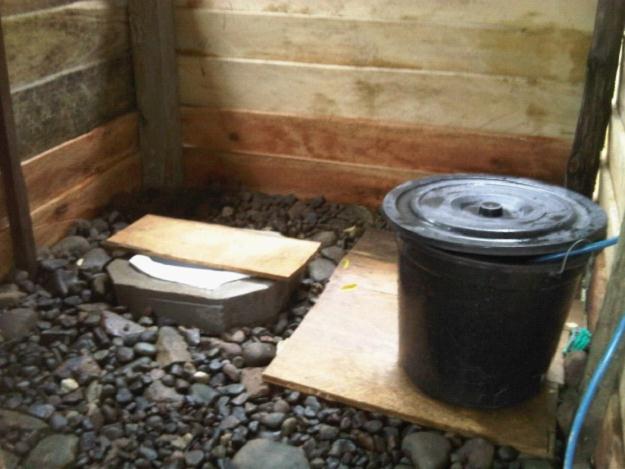
Simple family latrine built in Galung Village
© UNICEF Indonesia / Gerber
140 families out of a total 484 households in the village haven’t had access to proper latrines for some time, although efforts have been made to promote better hygiene in the village. However, demand for proper sanitation has been high, frustrated mainly by low incomes prevention the construction of latrines. Despite that challenge, Galung has just been declared the first village in the district to be “open-defecation free” – meaning no families go to the toilet in the open.

This success has been determined by the fact that the village head has great interest in sanitation, and there is a creative local entrepreneur/village artisan who has been able to build cheap latrines. 

Friday, 8 March 2013

The dark of day: life in a Jakarta urban slum

In the mornings, Neng helps her mum on the family food stall
© UNICEF/Indonesia 2012/Andy Brown
Neng is fourteen years old. She lives and works on Venus Alley, a lane in the notorious Jembatan Besi slum in Jakarta, Indonesia. Unlike other children her age, she rarely gets to see the sun. The slum is one of the most densely populated in Indonesia, rising to four stories in places. The ground floor homes are reasonably well constructed but as they ascend, they become increasingly makeshift, with walls and floors made from wood and scrap metal.