Showing posts with label Indonesia. Show all posts

Friday, 1 August 2014

Engaging global partners to innovate for Indonesian children

by Jeff K Hall, UNICEF Indonesia Innovation Lab Lead
 
Quick question: What do you get when you mix Schneider Electric Country Presidents with UNICEF innovators?

Here’s our answer: Creative arts, storyboards, and video skits!

In a recent workshop run by UNICEF Indonesia with WDHB (Worldwide Experiential Learning for Executives) and KIBAR (an Innovation group from Jakarta), UNICEF presented Schneider’s Country Presidents with a development challenge – the problem of natural disasters in Indonesia, a major issue in this country – and asked the team to come up with innovative solutions for young people.

Thursday, 31 July 2014

Check list for a healthy life

By Nova Fransisca Silitonga, Corporate Partnership Officer, UNICEF Indonesia

Have you washed your hands with soap? Had breakfast? Brushed your teeth? Pooed in the loo? Cleaned your ears?

These are some of the questions pupils at Elementary School SDN 69 in Galesong village, Takalar District, South Sulawesi have to answer every morning.

Their teachers ask them to fill in a wall chart to show which activities they’ve completed, and which they haven’t. The exercise is designed to encourage pupils to be honest while also teaching them how to have a healthy lifestyle.

Monday, 7 July 2014

Muslim leaders at forefront of social change to reduce stunting

 by Iwan Hasan


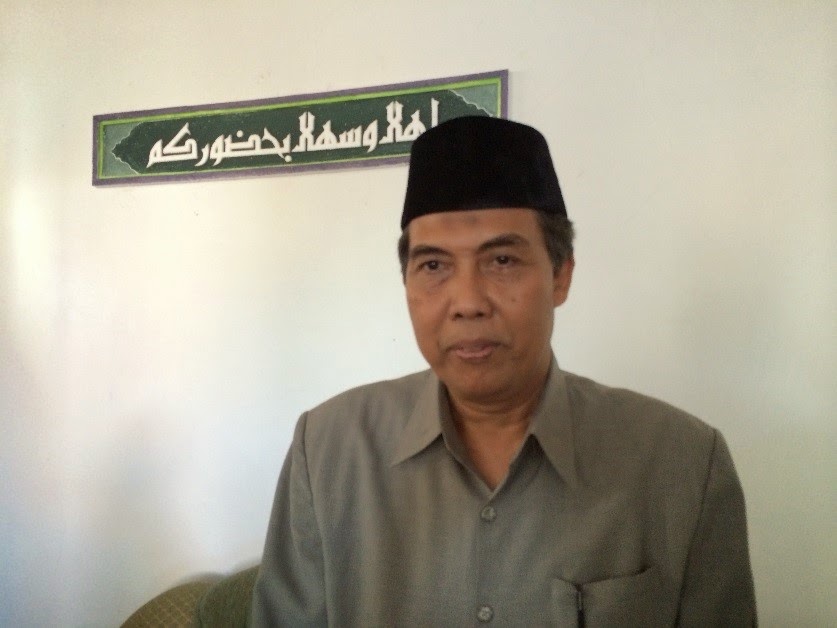
Kyai Subhan at the pesantren in Brebes, Central Java
© UNICEF Indonesia/2014/Iwan

BREBES, Indonesia, April 2014 - Subhan Makmun, known as Kyai Subhan, looks like a typical traditional Islamic scholar or ulama. He lives among thousands of his students in an Islamic boarding school in Brebes, Central Java. He wears a traditional sarong and a black Malay cap.  

But looks can be deceiving. Subhan’s view on Islamic Syariah is very progressive. “Islam is not narrow but broad,” he says.

Kyai Subhan is one of the most revered ulamas in Central Java thanks to his vast knowledge of Islamic jurisprudence. But classical Islamic books are not the only books he reads. He says he’s read “Facts for Life”, a book on child care published by UNICEF in association with several other UN agencies.

Wednesday, 11 June 2014

Sports for Development

Millions of eyes will be on Brazil this week when the international footballing elite meet for the World Cup finals. Football is hugely popular in many countries and there’s no doubt that sport is a unifying force. But not every child has access to physical education, games and sports. In Indonesia, traditionally most schools do not consider physical education a priority. Children with special needs are often unable to take part in the sports on offer. And many teachers think cleaning or gardening are adequate “sports” for girls.

Playing sports and games is good for children’s health. It also teaches skills like team work and improves speed, agility and perception. Four years ago, UNICEF, in cooperation with the Ministry of National Education, began work to improve access to inclusive physical education, sports and play in Indonesia. The Sports for Development programme was introduced in one district in each of four different provinces - Jakarta, West Java, East Java and South Sulawesi.

UNICEF has helped to train teachers from these provinces in how to build sports into the school timetable. The teachers have been introduced to games which special needs pupils and other students can play together. They have also learned how to make sports equipment out of cheap, readily available materials. UNICEF is producing a number of materials so that the Sports for Development programme can be replicated in other districts across the country.


Monday, 9 June 2014

Giving Klaten’s babies a nutritious start in life

By Anup Tiwari, Chief, Private Fundraising and Partnerships, UNICEF Indonesia

Pandes Village, Central Java, Indonesia, May 2014 - As the Chief of private fundraising and partnerships in UNICEF Indonesia's Jakarta office, I spend a lot of my time in office buildings - at my desk, in meetings or on the phone. But in early May, I found myself cross-legged on the floor of a huge bamboo building in Pandes village, Central Java, watching a group of expectant mothers play a fishing game.

I’d come with several colleagues to see one of UNICEF’s programmes in action. With the Government of Indonesia, we’ve helped to train a local midwife and several volunteers, known as cadres, to teach women about good nutrition both during pregnancy and after their baby is born. The cadres also work with fathers and older members of the community so that they can best support these new mothers.

Thursday, 5 June 2014

Violence against children - it can happen to anyone

By Ali Aulia Ramly, UNICEF Child Protection Specialist

Last week in front of more than 100 academics, civil servants, politicians and experts from around the world, one woman - a high-level, experienced professional herself - ended her presentation by telling the story of how she was sexually abused as a child.
I, and everyone else in the hotel conference room, including a delegation from the Government of Indonesia, was shocked to find out that one of our peers had experienced this and admitted it in front of colleagues.

We were all child protection experts attending a three-day Global Meeting on Violence against Children in Ezulwini, Swaziland. But we had not thought that one among our number could have been a victim of violence during childhood.

Thursday, 4 July 2013

Markus and his honai – The rough road to secondary education in Papua province

By Michael Klaus, UNICEF Indonesia

Markus left his village at the age of 14
to enroll in secondary school.
© UNICEF Indonesia/2013/Klaus
Megapura in Papua Province, Indonesia, July 2013 – It has been four years that Markus last saw his parents, and it will at least be another one until he may be able to go back home again to his village Kalbok - a 10-day walk away in the highlands of Papua province. The 18 year old is in 12th grade and he knows he would not be in school today had he stayed home. 

Markus has grown a lot during these four years, and he now is the leader of his honai in Megapura, a big traditional hut that serves as a boarding home for 50 adolescents and young adults. They all visit either a secondary school or a professional training institution in nearby Wamena, in the heart of Papua province in Indonesia’s Far East.

“The Highland districts in Papua have the worst child indicators of the whole country,” explains Margaret Sheehan, Chief of the UNICEF Field Office that covers both Papua and West Papua. More than 120 out of every 1,000 children die in their first five years of life, more than three times the national average. Only a third of the population has access to safe water and less than one in four can use a latrine.

Tuesday, 2 July 2013

How a volunteer is preventing violence against children at school in Central Java

Erry in one of his group discussion
sessions on violence prevention.
© UNICEF Indonesia/2012.
Preventing violence in schools is complicated and takes a strong vision, specialist knowledge, experience and patience.  UNICEF cannot do this alone and therefore works with the government and local non-government partners (NGOs). An army of volunteers is also playing a hugely important  role.

A fabulous example of this is Erry Pratama Putra – a man of 37 years from Klaten in Central Java, Indonesia. He first became involved with UNICEF six years ago, when he volunteered during the emergency response after the earthquake in Yogyakarta and Klaten.

“It is our responsibility to ensure children are fully protected from all forms of violence, whether at home, in school or in the community. I don’t have anything to offer except my heart, my soul, my mind, my spirit and my idealism to create a decent world for children as their future is entrusted to us today.”

Tuesday, 4 June 2013

It’s about abilities – UNICEF Indonesia launched the State of the World’s Children report 2013 on children with disabilities


Joining forces with gold medal winners at the Special Olympics and key activists for the rights of people with disabilities, UNICEF Indonesia launched this year’s State of the World’s Children report, together with the Minister of Social Affairs and other government counterparts on May 30th 2013.

“When talking about children with special needs, we often rather think about what they are NOT able to do, rather than looking at what they actually CAN contribute to society,” said UNICEF Representative Angela Kearney during the event at the disability-friendly Ministry building in downtown Jakarta. “This needs to change. Like in many other countries, children with disabilities are amongst the most marginalized and invisible children in Indonesia. Often parents simply hide them away, because they are ashamed or they don’t know how best to support them.”

Angela Kearney with Special Olympics gold medalists, Adi (left) and Stephanie (right)
© UNICEF Indonesia / 2013 / Klavert

Wednesday, 15 May 2013

Oral Rehydration Salts and Zinc: Simple but big solution to save children’s lives.


Veronica became very weak
as dehydration set in
©UNICEF Indonesia/2013/Rob Patmore
It was early morning in the town of Tambolaka on the Indonesian island of Sumba when Teresia and her husband rushed their daughter for treatment. Veronica was very weak and in need of lots of fluids. When she started vomiting and having loose stools, an Angkot (mini bus) driver immediately took them to sought help at the local hospital.

Veronica is a 1.5 year old girl, who became weak with every passing hour as the diarrhea continued and dehydration set in. Her mother Teresia watched, tenderly pressing Veronica close to her, hoping to somehow save her daughter’s life.

“We were very scared and worried,” says Teresia. “We have heard that children can die from just diarrhoea,” she adds while looking at her daughter. One of the health workers arrived with a small sachet of oral rehydration salts. She was also given Zinc tablet diluted in a teaspoon of water, which will help her fight a potentially deadly case of diarrhoea.

Tuesday, 30 April 2013

Malaria, a mother's greatest fear


6-year-old Eta and her mother Deborah
© UNICEF Indonesia / 2013 / Rob Patmore
There is no worse feeling for a mother than to think that her child might die.Yet, in Sumba, one of Indonesia’s islands in East Nusa Tenggara, too many mothers have watched their children dying from malaria. Malaria is infected through mosquito bites which are endemic in the island.

Deborah knows too well about this feeling. Her daughter, Eta, had such a high fever one night that she was shaking. “I thought she was going to die,” Deborah recalled how horrible she felt that night.

Eta was taken to the nearest health centre where her blood was tested. It was confirmed that she caught malaria. And it was one of the worst kinds.

Monday, 15 April 2013

Being malaria-free will also benefit the tourism industry


“I have really understood the issues related to malaria”, says Mr. Thamrin Wata, the Culture and Tourism Officer of South Sulawesi province in Indonesia. “It is very important for my work to know about this disease, because it is crucial for us to protect our tourist destinations from malaria to make them more attractive for travellers. Before I joined this malaria working group, I thought that tourism is only related to sexually transmitted diseases and HIV infections. But now I have realized that malaria plays also a role.

A baby sleeps under a bed net in Selayar district
© UNICEF Indonesia / 2012 / Asri
Mr Thamrin Wata has been working in the Tourism Office of South Sulawesi province since 1990. During all this time, he never received clear information about malaria and so he did not consider malaria a serious disease one needs to be scared of.

In October 2012, Mr. Thamrin Wata attended a workshop about malaria in Makassar sponsored by UNICEF in collaboration with the Provincial Health Office South Sulawesi. In this workshop he learned that malaria is a dangerous disease, especially in children and pregnant women, if not correctly managed by health workers. It is also a problem for holiday destinations, because tourists, especially foreigners, are scared of malaria infections and prefer to travel to areas that are free from malaria. As this directly relates to his work for the Tourism Office of South Sulawesi, Mr. Thamrin Wata decided to become a member of the malaria working group.

Tuesday, 26 March 2013

A visionary, a farmer - and a healthy village: how Galung put an end to open defecation

Despite is location just 17 kilometres from the district capital, Galung is an under-developed village in Kecamatan Barru, in the Indonesian province of South Sulawesi. 


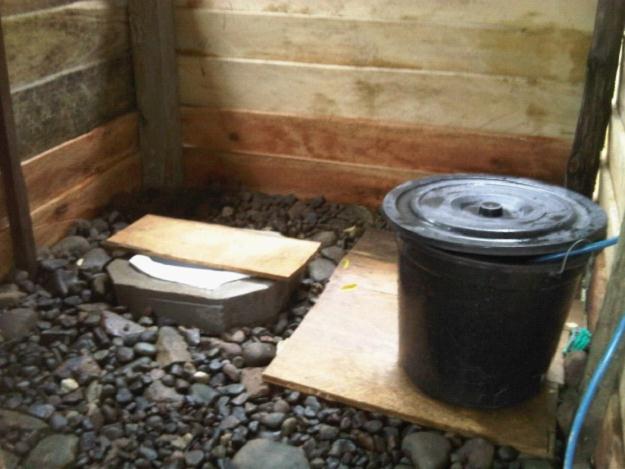
Simple family latrine built in Galung Village
© UNICEF Indonesia / Gerber
140 families out of a total 484 households in the village haven’t had access to proper latrines for some time, although efforts have been made to promote better hygiene in the village. However, demand for proper sanitation has been high, frustrated mainly by low incomes prevention the construction of latrines. Despite that challenge, Galung has just been declared the first village in the district to be “open-defecation free” – meaning no families go to the toilet in the open.

This success has been determined by the fact that the village head has great interest in sanitation, and there is a creative local entrepreneur/village artisan who has been able to build cheap latrines. 

Friday, 8 March 2013

The dark of day: life in a Jakarta urban slum

In the mornings, Neng helps her mum on the family food stall
© UNICEF/Indonesia 2012/Andy Brown
Neng is fourteen years old. She lives and works on Venus Alley, a lane in the notorious Jembatan Besi slum in Jakarta, Indonesia. Unlike other children her age, she rarely gets to see the sun. The slum is one of the most densely populated in Indonesia, rising to four stories in places. The ground floor homes are reasonably well constructed but as they ascend, they become increasingly makeshift, with walls and floors made from wood and scrap metal.

Thursday, 26 July 2012

Farhan supports Indonesian children


Muhammad Farhan (presenter and radio announcer) explains why he supports UNICEF Indonesia and its work for Indonesian children.