Tuesday, 30 April 2013

Malaria, a mother's greatest fear


6-year-old Eta and her mother Deborah
© UNICEF Indonesia / 2013 / Rob Patmore
There is no worse feeling for a mother than to think that her child might die.Yet, in Sumba, one of Indonesia’s islands in East Nusa Tenggara, too many mothers have watched their children dying from malaria. Malaria is infected through mosquito bites which are endemic in the island.

Deborah knows too well about this feeling. Her daughter, Eta, had such a high fever one night that she was shaking. “I thought she was going to die,” Deborah recalled how horrible she felt that night.

Eta was taken to the nearest health centre where her blood was tested. It was confirmed that she caught malaria. And it was one of the worst kinds.

Monday, 15 April 2013

Being malaria-free will also benefit the tourism industry


I have really understood the issues related to malaria, says Mr. Thamrin Wata, the Culture and Tourism Officer of South Sulawesi province in Indonesia. “It is very important for my work to know about this disease, because it is crucial for us to protect our tourist destinations from malaria to make them more attractive for travellers. Before I joined this malaria working group, I thought that tourism is only related to sexually transmitted diseases and HIV infections. But now I have realized that malaria plays also a role.

A baby sleeps under a bed net in Selayar district
© UNICEF Indonesia / 2012 / Asri
Mr Thamrin Wata has been working in the Tourism Office of South Sulawesi province since 1990. During all this time, he never received clear information about malaria and so he did not consider malaria a serious disease one needs to be scared of.

In October 2012, Mr. Thamrin Wata attended a workshop about malaria in Makassar sponsored by UNICEF in collaboration with the Provincial Health Office South Sulawesi. In this workshop he learned that malaria is a dangerous disease, especially in children and pregnant women, if not correctly managed by health workers. It is also a problem for holiday destinations, because tourists, especially foreigners, are scared of malaria infections and prefer to travel to areas that are free from malaria. As this directly relates to his work for the Tourism Office of South Sulawesi, Mr. Thamrin Wata decided to become a member of the malaria working group.

Tuesday, 26 March 2013

A visionary, a farmer - and a healthy village: how Galung put an end to open defecation

Despite is location just 17 kilometres from the district capital, Galung is an under-developed village in Kecamatan Barru, in the Indonesian province of South Sulawesi. 


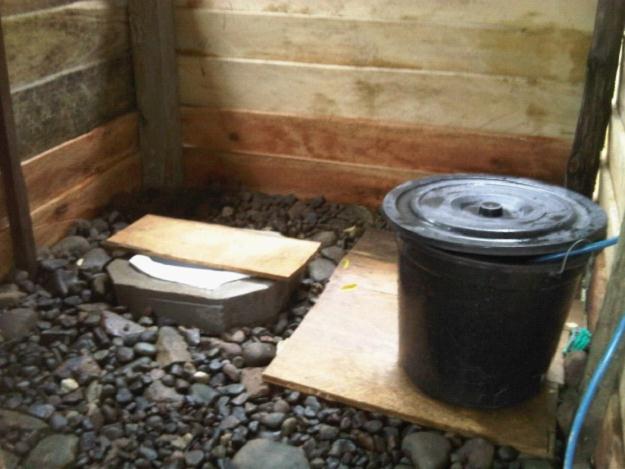
Simple family latrine built in Galung Village
© UNICEF Indonesia / Gerber
140 families out of a total 484 households in the village haven’t had access to proper latrines for some time, although efforts have been made to promote better hygiene in the village. However, demand for proper sanitation has been high, frustrated mainly by low incomes prevention the construction of latrines. Despite that challenge, Galung has just been declared the first village in the district to be “open-defecation free” – meaning no families go to the toilet in the open.

This success has been determined by the fact that the village head has great interest in sanitation, and there is a creative local entrepreneur/village artisan who has been able to build cheap latrines. 

Friday, 8 March 2013

The dark of day: life in a Jakarta urban slum

In the mornings, Neng helps her mum on the family food stall
© UNICEF/Indonesia 2012/Andy Brown
Neng is fourteen years old. She lives and works on Venus Alley, a lane in the notorious Jembatan Besi slum in Jakarta, Indonesia. Unlike other children her age, she rarely gets to see the sun. The slum is one of the most densely populated in Indonesia, rising to four stories in places. The ground floor homes are reasonably well constructed but as they ascend, they become increasingly makeshift, with walls and floors made from wood and scrap metal.